History of The Catalog

When I think about shopping in the 16th and 17th century, my Hollywood tainted imagination starts stirring up images of trading posts owned by old men with white hair, general stores that smell like horses, and markets on the streets.

A 1936 general Store
Source: United States Library of Congress

I was not entirely off. In 16th and 17th century North America you would do your shopping and ordering at the general store. In Europe, markets and smaller general stores were the norm.

But, before all of this “in-person” buying and selling, most of the Western World also dabbled in a different method of retail: the mail-order* catalog.

*Mail Order traditionally, was the process of selecting an item through a catalog, sending the company your order along with cash for the product plus shipping through post. You would receive your product by post in the following weeks.

The first catalog ever published is older than your great grandparents.

And your great great grand parents.

And your great great great great grand parents.

It is really old.

The first catalog was published in Venice in 1498, even before the Gregorian Calendar was issued.

It was a hand-lettered and hand-bound pamphlet of sorts. The inside included a list of books available for purchase. The pamphlets were created for distribution at the town fair.

This method was used by a handful of book publishers, seed sellers, and nursery sellers (nursery = young plant). This limited use of catalogs continued on for the next three centuries.

And then…

17th century Europe saw a surge in mail order catalogs.

The instigation of this surge was due to the technological advances in the printing press and the growth of booksellers (why yes, there is a causal relationship there).

The first mass produced mail-order catalogs were created for the retail sale of books. I use the term “mass produced” lightly. At this point in history, printing was still pretty expensive and manual. The price of books and the price of creating and printing catalogs was high.

However, the catalog seed had been sewn and other retailers and traders saw the massive opportunities the emerging print technologies permitted. They were quick to jump on the mail-order bandwagon.

North America

Let’s take a treacherous 19th century trip across the Atlantic Ocean and get off on the Eastern Coast of the United States. Are there catalogs in the United States?

Why yes there are.

And Canada?

Yup — there too.

The credit for the very first mail-order catalog in the United States is often mistakenly given to the Sears Roebuck Mail Order Catalog.

Truth is, in 1845 Tiffany and Co. released a catalog called the “Blue Book” making it the first mail order catalog in North America. Second up was the “Eaton’s Catalog” that was printed and mailed in Canada in 1875.

It wasn’t until 1894 that Sears and Roebuck published its first catalog.

***

Catalog Boom: Post-war consumerism and brick-and-mortar stores

The rise in consumerism after both World Wars had a positive impact on the use and distribution of catalogs. After the First World War, the dynamics of retail in North America began to change. The end of the First World War marked a rise in consumerism. Industries established during the war encouraged rapid technological innovation in electrical and household appliances, as men went to serve, women were moved in to the work place and needed products that made “home life” easier (i.e. packaged foods, notably Kraft Dinner sales sky rocketed in this period), and advertising progressed.

People also began to have more leisure time. Increased lesuire time was a strategic move on part of Henry Ford who wanted his workers to go spend money and buy things after work. For Mr. Ford, leisure time gave the average worker an opportunity to “find uses for consumer products, including automobiles.

Post World War Two marked an even larger rise in consumerism. The industry spurned by the Second World War pulled North America out of the Great Depression, and increased average wages and disposable income for young people. They were ready to spend money.

There were three factors at work to help spread the use and distribution of catalogs. [1] Increased leisure time that allowed workers the time to buy; [2] the growth of industry created more high-paying jobs; and [3] concurrently, an increase in wage and disposable income. This gavemore people greater spending power.

Essentially, the societal changes catalyzed by the First World War and the increase of spending power catalyzed by the Second World War created greater demand for goods. This demand created a related increase in the demand, use, and popularity of mail-order catalogs.

In addition to mail-order catalogs retail brick-and-mortar shops were becoming more common and some of the first shopping malls in North America were built.

Traditional mail-order-catalog-only companies, such as Sears, eventually opened up brick-and-mortar stores t00. However, keeping the mail-order catalog was a central part of their sales strategy.

Advertisement for Sears First Retail Store (1925). Image source.

The Golden-Era of Mail Order

As retail stores began popping up with more fervour and the shopping experience in these stores became better, buying through mail-order catalogs became more of a complimentary activity.

This did not mean that the power of mail-order catalogs diminished. No sir, the 1980’s was a sort of catalog golden era. Companies such as Sears, JCrew,Lands End, Talbots, and L L Bean were all banking in cash with the success of their retail catalog business.

Cover of 1981 Land’s End catalog. Image Source.

A page from a 1982 LLBean Catalog. Image Source.

A page from the 1983 Sears Christmas Catalog. Image source.

Cover of 1988 J.Crew Catalog. Image Source.

In 1988 sales by catalog or mail were estimated at $164 billion.

In the 1990’s the retail landscape began to change. The catalog businesses slowly transitioned away from a catalog heavy business model. Sears published its last general catalog in 1993. However, they published seasonal catalogs and continue to do so today.

You might think this change in landscape was due to a decrease in mail-order sales. Not true. Sales couldn’t be higher. From 1990 to 1996 mail-order sales grew at a rapid rate — 9.9% per year. To put it in context this was about 2 time the average growth of in-store sales.

Sears and other mail-order companies were simply responding to a change in the retail climate. But, the value they placed on and saw in mail-order catalogs did not diminish.

Catalogs in Present Day

There has been a booming renaissance of catalogs with fast growing eCommerce companies like Bonobos who use catalogs to grow their sales.

These companies have also questioned traditional catalog design and added fantastic new flare to their pages. They move away from the properly organized catalog to smaller more inspirational catalogs with magazine-style product photos and personalized content that is unique to each user.

Cover of 2013 Land’s End Winter Catalog. Image Source.

A page from Bonobos 2014 Catalog. Image Source.

In a 2013 article, Political Analyst Andy Ostry and branding expert Polly Wong, write:

“Small, mid-size and premium brands alike are discovering that a high-impact direct-mail piece—from full-size catalogs to postcards—has become an effective means of ushering customers to their sites and has become an excellent path to this offline target audience.” (Source)

It’s no surprise that popular retailers such as Saks Fifth Avenue and Bloomingdale’s frequently send past customers catalogs to supplement greater in-store sales.

Catalogs also usher in higher paying customers, Craig Elbert, Vice President Marketing for Bonobos says customers who come to the website after first viewing the catalog spend 1.5 times more than a new shopper coming in with no catalog.

The Future of Catalogs

There is a common misconception that mail-order has been phased out given what appears to be a high cost and poor return on investment.

In my research I was flooded with private stories about companies who had pulled their catalog after the 2007 Great Recession to save money, only to notice a dramatic fall in sales — independent of the decrease in general consumption at the time. A jewellery company stopped printing and including their catalog in their shipped packages — they noticed a significant drop in sales. Or this individual who has created an extremely successful business exclusively around mail-orders, essentially leveraging a channel that everyone had abandoned because it was “uncool”.

Undeniably, the catalog has now become a highly undervalued distribution channel.

Take a moment to consider the data:

A greater response rate.

Analysis done by the Direct Marketing Association on 2012 data: direct mail (i.e. catalogs and flyers) have a 1.1 to 1.4% response rate. Considerably higher when compared to these response rates: email (0.03%), banner ads (0.04%), and paid search (0.22%). This difference is significant. In 2013 theDirect Mail Association found that 65% of consumers of all ages have a made a purchase as a result of direct mail.

Cost per conversion is cheaper.

With catalogs you need to spend $47.61 U.S. to land an order. You have to $53.85 for email and $99.47 for paid search!

Direct mail is uncluttered.

Direct mail is free from the noise and uncomfortable competition for attention, especially when compared to the bombardment of email and digital ads users currently experience online.

The catalog has a profound history and holds a valuable place in our history. However, its effectiveness extends beyond its narrative and makes it a potent tool for the future of marketing.

This post was first published on the Now In Store blog.

Go wander, how meandering in the outdoors can enhance creativity


0*v0kwX6RqaljCn6FH
Originally posted on The Ooomf Blog
Re-published on Medium
Wandering for clarity is a secret of the literary greats. Writers such as Rousseau, Dickens, and romantic poets such as William Blake and John Clare, all used wandering to clarify their thoughts. It seemed to de-stress their minds and gave them an opportunity to think up great ideas.

Dickens supposedly logged in 20 miles every day.

Dickens’s walks served him in two ways. On one level, they were fact-finding missions during which he recorded with his keen eye the teeming urban landscapes whose descriptions were his stock-in-trade…But Dickens’s walks played another, more important role in his life. They were, in a sense, acts of self-preservation… [he] found composition to be hard, painful work. The hours he spent at his desk agitated him tremendously, and walking served as a kind of safety valve. — Frisky as the Dickens

I decided to give it a go myself. Everyday for the past two weeks, when my thoughts weren’t flowing, I got up and left. I would prance around the neighborhood or leave for a stroll in the park.

It works! My thoughts began to “flow” again. It was the perfect get-away to plan my next step.

There was something about leaving my desk and being outside that gave my troubles some context. I wanted to understand why this happens.

Trees, grass, and plants.


Fertile Green

When we take a break from our desk and wander outside we’re bound to see at least one tree. Occasionally a longer stroll will lead you to a grassy landscape. Seeing nature’s green is reassuring and it’s calming.

And it also spurs creativity.

German and U.S. researchers tested the impact of viewing fertile green colours on creative performance. Participants in the study were either shown the colour green, white, red, gray or blue. After a brief glimpse they were asked to complete a creative task.

For example, in one task participants were asked to list as many creative ways to use a tin can.

In another, participants were asked to list as many “round things” they could think of.

Their data revealed a strong correlation: participants who were shown a brief glimpse of green had increased levels of creative performance.

Basically, those who saw green came up with more interesting ways to use a tin can and included absurdly round things in their list.

Seeing green triggered participants to find creative solutions. They began to think “outside of the box”.

The colours that poets and writers “took in” on their walks helped enhance creativity.

And apparently so did their movement:

When we wander our body lacks rigidity.

When we go for a saunter we let our arms and legs move freely. Dickens was described to have a “swinging gait.”

Theories of creative thinking and creative intelligence have actually described the concept of creativity as being fluid. Creativity is something that goes with the flow.

Researchers at Stanford and Tufts wanted to see who had enhanced creativity: those that moved their bodies in a fluid way or those that moved in a rigid way?

To test this, they had two sets of participants: one set moved their arms in a fluid motion and the other in a rigid motion. After the exercise participants answered a set of questions.

For example: list as many uses for a newspaper, or list as many vehicles you can think of.

The participants that moved their arms in a fluid way showed enhanced creativity. For instance, one of these participants included “camel” in their list of vehicles.

When we stroll, not only do our arms, but our whole body moves with a fluid rhythm. The movement that we liken to creativity also amps it up. In addition to moving with ease there is another subtle distinction to wandering, which is:

Idle time

A wander is quite different than simply walking to a destination. When we wander, there is no particular destination in mind. There is nothing to be achieved/accomplished/bought.

A meander gives us a moment to be idle. Essayist and cartoonist, Tim Kreider writes,

The space and quiet that idleness provides is a necessary condition for standing back from life and seeing it whole, for making unexpected connections and waiting for the wild summer lightning strikes of inspiration — it is, paradoxically, necessary to getting any work done. –The Busy Trap

Being idle is an opportunity to have a eureka moment.

Don’t worry about becoming lazy. Noble prize winning author, journalist, and philosopher Albert Camus, has some reassuring words:

Idleness is fatal only to the mediocre.

Indulge in the pleasures of simply doing nothing. There is such a thing as powerful meaninglessness. Go for stroll and give yourself a chance at creative inspiration.

For more articles like this as soon as they’re published, enter your email here or head over to the ooomf blog.

Devote time to un-schooling


OnWaterOriginally posted on: The Ooomf Blog

Re-posted on: Life Hacker and Medium

When I went to university I ended up in a discipline (Sociology) that I surprisingly loved. I read the most fascinating books (such as this one, this, this, and this), my perspective on the world changed, and I got advice from some really smart people.

But I realized early on that the credentials I was going to graduate with were probably worth little in the real world.

Two years ago I read something that stuck with me:

If you get creative in the informal job market (and outside of legally licensed fields like law and medicine), the notion of “job requirements” is—as we’ve seen—negotiable.

On that account, I am not dismissing the necessity for credentials in certain areas (legal/medical). But, if you’re in the boat that I was in, that is, majoring in something a little more “soft,” you have to be a bit more proactive and aware of what’s going on. If you want to break into another field (ex. programming, design, writing, sales, photography, multimedia, the arts, entrepreneurialism), what you’ve created and done in the past sometimes holds more value than what is written on your degree.

Here are some of the things I did and few things I wish I knew earlier:

Solicit feedback ruthlessly
Get feedback from everyone you can. Ask your professors, also your peers, and try extra hard to get feedback from people that are not in university and/or have been out of the system for a while.

Get feedback on everything. On your writing, the way you made your most recent decision, your side projects, your schedule, social situations,etc.

Getting feedback is probably the best way to improve yourself. There are just some things that we can’t see in ourselves that other people can point out fast. Prioritize this and you’ll be way ahead the rest of your peers.

How do you do this? It’s mustering up a small amount of courage and just saying “Hey, can I ask you a question?” And then ask it.

Most people are honoured you’d ask them.

Some people might be vague with their feedback, which might not help out all that much. But every once in a while you’ll find someone who is brutally honest. These are the people you need more feedback from. Be thankful, put the advice in to practice, and then pay it forward. When someone asks you for advice, be honest.

Solve problems and add value
The one thing that made me most hirable came from emailing someone I admired and offering to help them out.

This is something I learned in the Recession-Proof Grad by Charlie Hoehn.

Quick summary: reach out to someone you’d like to work for. Offer to work on a mini project that would be useful to them, for free to start. Then blow them out of the water with your work. Nurture that relationship and develop yourself.

Everyone is struggling with something, and everyone’s too busy. Use that to your advantage, offer to help.

Develop a Skill
If you take anything away from this piece it’s this: while you’re at university make something else a big part of your life (Read: actively avoid trying to make your world revolve only around school). You have control over who you become. Develop a skill on the side.

For instance (and inspiration):

While Marie Curie completed her studies, she quietly fostered her interest in radioactivity by researching/experimenting in her spare time.
The Marketing Director of American Apparel doesn’t have a degree in marketing, business, or engineering. He taught himself how to “market”.
American author, John Green, encourages people to mess about with things on their own and create “gifts for people.”
One of the most coveted personal finance gurus today, Ramit Sethi, majored in Science, Technology, Society with a minor in Psychology. Personal finance was a side interest that he developed by starting an educational blog.
So how do you go about doing this? For starters:

Find someone outside of the university world to work under. Research them. Try to understand what sort of problems they have and might be too busy to deal with. Offer to help them with those problems. Here’s a good guide on figuring out who to approach and how to approach them. Don’t worry about coming off as annoying. Young people have an advantage; we can be annoyingly persistent without necessarily coming off as annoying.

Develop a sellable skill. Break down what skills your ideal job requires. For instance if you want a marketing job, do you know how to write well? Do you know how to make people feel good? Do you know basic photoshop? Do you know how to write copy for a website that converts? Learn each specific skill. Then pitch it to someone who needs it. Education is essentially accessible to anyone with wifi. You can teach yourself nearly anything for free or for cheap. Check out M.I.T’s free online courses, Khan Academy, Udemy, and Skillscrush. Here’s a complete list of massive open online courses.

Do your thing, of course, study, and while you’re at it develop a skill on the side. Reach out to someone, apprentice, and get feedback on everything. Solve problems, provide value, and try to find meaningful work.

It’s up to you to create the life you want.

Why are we attracted to beautiful things?

tumblr_mrram3vpdO1st5lhmo1_1280

Originally posted on: The Ooomf Blog

“We wear clothing and jewelry. We buy the biggest, most beautiful houses we can afford. We decorate our homes with furniture, rugs, prints, and gardens. We drive finely designed brightly colored automobiles, which we choose for their aesthetic appeal as much as their fuel efficiency. “— Geoffrey Miller in the Mating Mind

I gawk at old stone buildings and the most vivid memories I have are of lush landscapes and forest clearings. I will opt to pay a premium for an app that looks “pretty,” and I am transfixed by websites with exquisite design.

I remember ridiculously well, I was 14 and my brother ordered his first Apple product (an iPod touch) and immediately called up two of his closest friends. He was inviting them over so they could watch himopen the package. The three of them sat around mesmerized, by the beauty of the box and the way everything fit just so perfectly. They analyzed and commented, my brother removed layers of black plastic and small white instruction booklets. They were in absolute reverence at the beauty of the box and (of, course) the perfectly proportioned product.

Why did this box and this specific product garner such a reaction? What made it beautiful?

When it comes to objects and “things,” we agree on a few basic principles of beauty.

Simple objects are attractive.

We are attracted to simple, clutter-free, and minimalist design:


On Architecture

[High ceilings, simple geometric shapes]

[Clutter free desktops]

Supposedly, the golden rectangle explains our attraction to “simple geometry” succinctly.

When you subtract a square from a golden rectangle you are left with another golden rectangle. 5 X 8 is the typical proportion. A few years ago blogger Julian Seidenberg unpacked the dimensions of the iPod…and you guessed it, it’s just slightly taller than the golden rectangle.


The gray outline has the proportions of the golden rectangle. If you remove the red square, you are left with another golden rectangle.

Symmetry makes it beautiful.

That’s exactly what this study at Berkeley found when they conducted psychophysical investigations of viewer’s aesthetic preference.

The researchers asked participants to choose the most attractive photo from a limited set of options. They also watched participants crop photos and asked them to take the most aesthetically appealing picture they could.

The results of the study showed that participants had a center bias, where the subject of the picture is in the center of the frame, like this:


Unsplash

And an inward bias, if the subject of the picture was intentionally off-center, participants had an aesthetic preference when the subject was looking inwards instead of outwards, like this:


Unsplash

When you see something beautiful its symmetry and its simplicity is, likely, in perfect harmony. Geoffrey Miller, an evolutionary psychologist, studies why human beings are attracted to such things. He states:

“The mind makes very little sense as a Swiss army knife or a military command center. It makes more sense as an entertainment system designed to stimulate other brains. ”

This makes sense to me. There was nothing mechanical about watching my brother unpacking his first iPod. It was pure entertainment. When you see/hold/touch/feel something beautiful the beauty of what you are viewing is entertaining your mind. And what you are feeling is, quite simply, pleasure.


(1) We feel a heightened state of pleasure because we are acknowledging effort.

Ellen Dissanayake, an anthropologist, at the University of Texas explains it this way:

“Artistic production entails effort, and effort is rarely expended without some adaptive rationale. Art is ubiquitous, and costly.”

We can extend Dissanayake’s definition of art to include beautiful design and beautiful objects. According to her theory, we have an appreciation for discipline, energy, and talent. As such, expending energy in creative endeavors indicates that there is an adaptive argument. The pleasure we feel is signalling something primative.

Miller suggests the pleasure felt upon experiencing a beautiful piece of artwork is connected to our sexual selection. Art enhances the fitness of the person who created the art.

The production of art then, is a natural extension of the ornaments that adorn the body (ex.: breasts, beards, and on).

To sum it up, this theory suggests the following: if you create beautiful things, you stimulate minds and deliver pleasure, and by proxy of your art you are attracting potential mates.

This pleasure also has a utilitarian side effect:

(2) When we feel a heightened state of pleasure, the object becomes easier to use. Beautiful things are easier to use.

This study looked at the flow of information from plane to brain and found that our eyes can scan an image the fastest when the image is in the shape of the golden rectangle.

For instance, Hosey, author of The Shape of Green: Aesthetics, Ecology, and Design, points out that the most ideal shape for a paragraph is the golden rectangle. You can read faster and store more information if it is. Try it for yourself:


Paragraph screenshots from the New York Times

The second paragraph has proportions similar to the golden rectangle.

Supposedly, even the old twitter interface had proportions extremely close to the golden rectangle:

Although, the golden rectangle appears to pop up in the most interesting places and offers a mathematical explanation to some things we find beautiful, Dr. Mario Livio argues otherwise. He offers, that many valuable and awe-inspiring pieces of art are those that have departed from the norm. It would be careless to argue that the golden rectangle explains “beauty” absolutely and irrefutably.

In spite of that, the golden rectangle often does show up in the objects and design we find beautiful.

Design engineer Don Norman has dedicated his life’s work to deconstructing the design of products, he states:

“Attractive things work better.”

The design needs to be in harmony with the usability of the product. “Efficient design” is quite often very beautiful. However, most often, an attractive product gives the impression of being more efficient. The product, beyond its utility should serve as an extension to pleasure.


rasamalaysia

[The Bento Box: a perfect example of simplicity, symmetry, aesthetics, and usability in harmony.]


We feel pleasure when we see something beautiful, making attractive things feel like they work better.

How can you bring more of the art-based pleasure in to your life?

(1) One way is to amp up the amount of beautiful things you view. (Re)introduce art in to your life, re-organize your workspace to be more aesthetically appealing, and on.

(2) Another way is to create.

“If we want to make meaning, we need to make art.” –Brene Brown

Invest time in the creation of beautiful things. Take the time, once per week to create: bake, draw, paint, dance — do what you need to do to feel creative.

If you’re in the business of creating, focus on the aesthetic, see what can be enhanced, re-evaluate the superficial, and go from there.The aesthetics of your service/product is much more than an added benefit. Creating a beautiful product delivers value. It signals to something innate and if you hit the right notes you’re giving pleasure to whomever experiences your creation (ex. my brother and his pals).


For more articles like this as soon as they’re published, enter your email hereor head over to the ooomf blog.

Important: How to Write a To-Do List

tumblr_mnh17lfd9R1st5lhmo1_1280

Originally posted on: The Ooomf Blog

I remember trying out my first hour-by-hour schedule to help me get things done when I was 10. Wasn’t really my thing. I’ve since retired the hourly schedule, but I still rely on a daily to-list.

I went through the same motions every night in university. I wrote out, by hand, my to-do list for the next day, ranked by priority. Beside each task I wrote down the number of hours each task should take.

This was and still is a habit and finding a system that works has been a struggle for me. I’ve tested out a variety of methods, bought a number of books on the subject, and experimented: colour-coded writing, post-it note reminders in the bathroom, apps, day-timers….you name it, I’ve tried it.

In my moment of retrospection I still wasn’t sure if my current system was spot on. So, I went on an adventure to figure out the most effective way to not only write my daily to-do list but to get more things done.

***

The brief history of the to-do list
Charles Schwab was a steel tycoon and a man obsessed with output and economic efficiency. He was one of the first Americans to introduce a time saving workflow process, called Taylorism, in his factories.

In the early 1900’s, Charles sent out a memo stating that he would award handsomely the individual who could improve productivity amongst his employees.

Ivy Lee, the father of public relations, met up with Schwab and suggested the following: each employee should write down 6 tasks everyday and rank them from highest to lowest priority.

They should immediately get to work on the first task. After completing the first task they were to move on to the next one. Any unfinished tasks simply go on the next day’s list. After 90 days of list making and monitoring Schwab noticed productivity dramatically improve.

And thus the to-do list was born.

***

How your to-do list is hurting your productivity

In present day, the to-do list has become a daily necessity but it’s not exactly a tool that makes you more productive.

ku-xlarge

At some point you’ve probably made a to-do list with 10 or more tasks to complete in a short period of time. As you get to work, the sheer immensity of tasks leaves you in a state of paralysis, with a heavy sense of obligation and a nagging feeling in the back of your mind.

That nagging feeling is the result of having too many conflicting tasks. In the book Willpower: Rediscovering the Greatest Human Strength, psychologists Robert Emmons and Laura King looked at a group of participants who listed 15 goals they’d like to achieve.

They found that a large list of conflicting goals creates repetitive thoughts about the tasks at hand. There is constant worry that is created in the individual’s mind.

Human beings are completionists. We like to get things done. Psychologists call that nagging feeling the Zeigarnik effect, an old phenomenon in the field of psychology. Our mind will remain fixated on an unfinished task, causing our mental and physical health to suffer too. Upon completion we are freed from the burden of this task.

The psychological rush of completing all of our tasks is a state our mind loves. So why do we make those gigantic lists (that will take eons to get done) in the first place?

It’s one of the great pitfalls of a to-do list

Dr. Tim Pychyl is an expert in the area of procrastination research. He argues that you feel an immediate sense of accomplishment simply by writing down all the tasks you would like to complete, without completing any one of them. Your brain will simulate the success you would like to feel.

BestToDoListEver.jpg

A 2002 study followed 83 undergraduate students who were searching for a job after completing university.

Students that fantasized more about finding a job:

  • tried less hard to find jobs
  • sent out fewer job applications
  • received fewer job offers
  • and earned less money

Writing down many non-specific tasks on a to-do list acts as the perfect proxy to such fantasies. It allows you to fantasize about successfully completing hard tasks and gives you permission to mentally indulge in this thought. It is instant gratification, but you haven’t really accomplished anything.

You have a limited number of decision-making “points”
Starting your day with an unprioritized to-do list can also undermine your ability to make productive decisions as the day goes on. Ego depletion refers to the amount of decision-making “points” we have. As we use up our points our ability to make “smart” decisions becomes impaired.

stressvsproductivity

Over 100 experiments confirm that by exercising more self control at the start of the day, your motivation and attention will decrease as the day goes on. This is why people tend to cheat on their diets after stressful and exhausting days.

So, if you spend every morning deciding what to eat for breakfast or picking out what you should wear, you are wasting limited self-control resources on unimportant tasks.

This is one of the reasons why legendary Apple CEO Steve Jobs was known for wearing the same outfit every day.

United States President, Barack Obama voiced a similar philosophy on mundane tasks when he said:

“You need to focus your decision-making energy… You need to routinize yourself.”

If you start your day tackling unimportant tasks on your to-do list, you are frittering away your self-control that would be better used to focus on tasks that will have more impact.

Procrastination increases with vague tasks

Writing vague one-word tasks on your to-do list prevent you from getting the task done faster.

A team of psychologists looked at the effect of abstract versus concrete tasks on procrastination when they showed participants the following two paintings and asked them to mail back a short survey:

seurat_detail.jpg

The first group of participants were shown painting 1 and were told the artists wanted to arouse feelings of emotion and harmony.

The second group of participants were shown painting 2 and were told it is an example of an art technique called pointillism.

The second group (those that thought about technique) took an average of 12.5 days to return the survey, whereas the first group (those that thought about emotion and harmony) took an average of 20.5 days.

The psychologists concluded that thinking in abstract, touchy-feely terms delays execution. 

You’ve got to think about your to-do’s in concrete terms. While writing down a task using non-specific terms may help save you time for now, it hurts your progress and does not save you time in the long run.

To boil it downyour willpower depletes as the day goes on, you make a long unprioritized to-do list of abstract tasks and feel accomplished, and yet those unfinished tasks leave you with a nagging sense of obligation. What are you to do?

This is how you write a to-do list

1. To get the task-completion rush all you really need is a shorter list. Write down no more than 3 tasks on your daily to-do list. You may have a second on-going list that keeps track of the tasks coming down the pipeline.

Prioritize them by importance.  Ask yourself: “which task will make me feel most accomplished?” That is task number one. After you have three tasks listed, put any overflow tasks on a separate piece of paper that you can easily tuck away. Keep it out of sight.

2. Use small post it notes or lined index cards. A small piece of paper will physically prevent you from writing a long to-do list.

3. Action tasks. David Allen, the to-do list guru suggests writing your task down as an action. This will prevent your from using non-specific terms when making your list.

For example, instead of “find movers” try “call mom and ask her to suggest a mover.’” Or “start and finish research for Tim” try “Do a journal article search using the terms: XYZ.” One way to keep a check on this is every time you write down a new to-do, ask yourself: “What is step #1 to get this task done? Step #1 becomes your new to-do.

4. View one task at a time. If three-tasks per day is too much regression for you, you can boost your productivity by viewing your list one task at a time. Try Now Do This.  Or if you’re old school write one task per post-it note and then stack them so the preceding tasks are hidden.

Quick Tip: Before you even get to writing your list, automate-out morning distractions and petty decision making to maximize willpower. For example, have breakfast ready the night before. Use the timer on your coffee machine. Block out the Internet for the morning (try Freedom or Write Room).

***

Ivy Lee didn’t have it quite right, 6 tasks were way too many for one day. But he had his head in the right place. Charles Schwab later went on to build Bethlehem Steel in to the second largest independent steel production companies and Lee, went on to regularly rub shoulders and consult for the Rockefellers.

This was the inspiration for a post on Fast Company and was republished on Medium

For more articles like this as soon as they’re published, enter your email here or head over to the ooomf blog.

On Running Successful Events with Few People and Less Money

Event

Originally posted on: The Founder Project

The Founder Project hosted their first demo day at the Notman House here in Montreal earlier this month. With 7 startups vying for a year of hosting services from softlayer, an entry to the startup program of Fasken Martineau, office space at the Notman house, and a chance to pitch at FounderFuel’s demo day on July 11th.

Each team had 6 minutes to pitch. But it wasn’t exactly a pitch event. The judging took into account the pitch and how much progress the startup made since April 1, 2013 (the deadline for applications).

These are the teams that won:

First place: Outpost, is “the centerpoint of the sharing economy.”  Outpost aggregates non-commercial websites that facilitate travel. It’s a sharing economy amalgamation site. Check it out for yourself: outpost.travel

Second place: Needle, is out to fill a void, where employers can scope out high quality creative talent and give creative talent a platform to meet employers. Check it: needlehr.com

Third place: Plotly, allows you to create the most beautiful graphs on the net in the easiest possible way. They’re here: plot.ly

***

The pitches were great and prime example of what Montreal based student-startups are capable of. But what blew me away the most, was how successful the event was. I kept looking around the room, trying to piece together in my mind why the event was so successful.

You see, the event was free. There was no $$ incentive to attend.  The event had free registration on Eventbrite…you could easily commit the click “attending,” and not really attend, sin.

And there was little to no marketing for the event. The showdown wasn’t even advertised on their website.

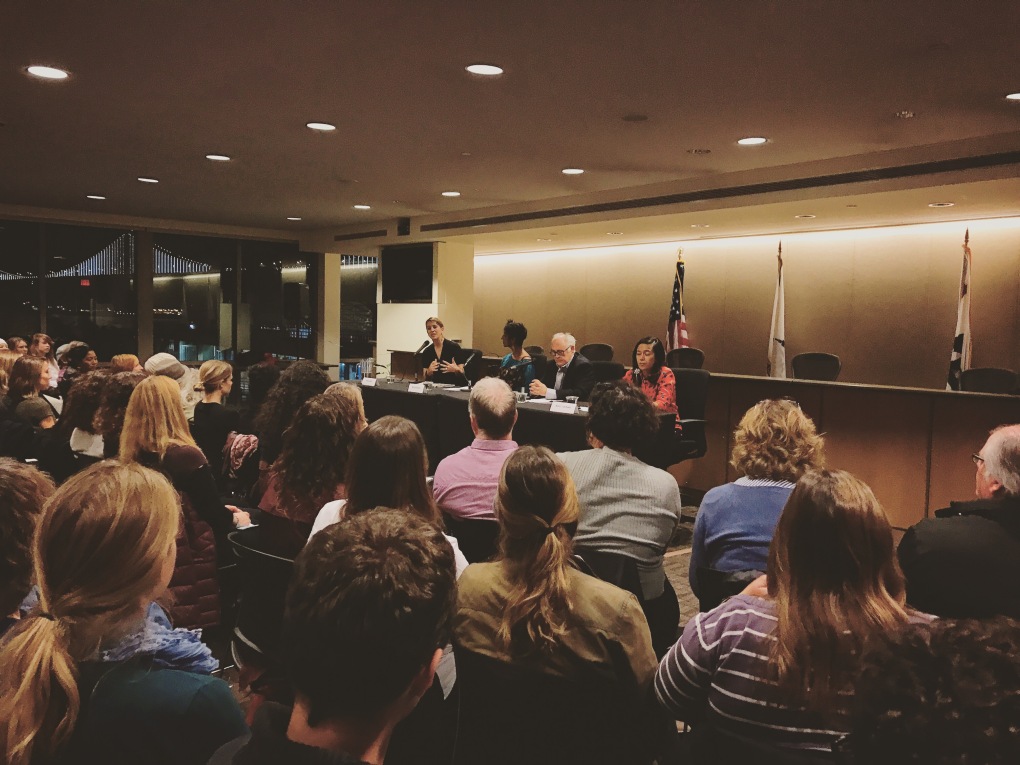
Despite this, the event was jam packed. All the seats were occupied, and many people were standing up in the back. Each attendee in the room was feeling every bit of the 36 degrees celsius plus humidity, and they all endured the “burning heat” till the last second of the seventh pitch and stayed longer after that, just to chat.

This is a picture of the room that was tweeted within minutes of starting: TwitPicJuly2013

The event achieved what it set out to do: showcased high quality student enterprises, celebrated the victorious ones, and gave the attendees an opportunity to mingle and network. At the end of the day different V.C.’s gave some hearty and happy comments to The Founder Project team.

So what exactly did the Founder Project do to host such a successful event with limited resources?

I sat in on a meeting two days before the event and chatted with Ilan and Yasmina after the event to understand the method to their madness.

(1) Concentrate your planning

  • T.F.P team started planning the event 2 weeks in advance. Arguably this, prioritized the most important tasks and avoided the sort of worry that comes with planning too far in advance.
  • They did a task-by-task run through two days before the event.
  • Keep room for creativity. Two days before the event they were still brainstorming ways to make the event better. The idea to put up a large poster for attendees to sign and the floorplan of the event room were all last minute light bulbs.

(2) Find free space and cut costs ruthlessly

  • The Notman house (a sponsor of T.F.P) provided space for the event for free. Of course, if you’re planning an event there are a number of ways to get free space. If you’re a student at a university classrooms in the evenings and weekends are easily accessible free of cost. Church basements, executive boardrooms, and friend’s houses can require some hustle but are also cheap.
  • Seek out discounts. The event cost $400: for chairs, beer, and food. T.F.P had a team member that had already been sponsored by Labat that gave them a discount on beer. One way to save money on alcohol is to opt for wholesale options and/or just ask the manager: “I am hosting an event for 100 people and was wondering if you could help me save money on liquor costs.”

(3) Have one person that coordinates everything, delegate wildly

  • For volunteer events, I speak from first hand experience that things can get quite messy if you don’t have one person that’s keeping track of everything.
  • The showdown had the entire team of T.F.P. help plan the event. But, Yasmina, was coordinating everything. She was delegating and following up to ensure that everything was in line. This is key, pick someone that will be able to delegate and isn’t afraid to follow up.

(4) Strategize your marketing when you’re budget is limited

  • T.F.P made many posts on Facebook (831 fans) and loads of tweets on Twitter (431 followers) to pushing the event.
  • Of course, it’s hard to know how many attendees actually convert from social media promotion. And if you want to guarantee attendees and/or have limited social media followership you should kick it old school. Exert your energies to word of mouth and personal invitations. Which was the second part of their marketing strategy. They sent off personal invitations to mentors/investors and reached out to all applicants who had been part of the process.
  • No matter how big or small your event is, reach out to press. Every team member of T.F.P was asked to reach out to press contacts. On the day of the event they had: Techvibes present, and we were covered by CBC/Radio-Canada the following day.

(5) Keep your attendees happy

  • Free, cold beer, and food.

***

The success of the event points to two things:

  1. The necessity and growing community for startups in Montreal.

  2. The possibilities that are achievable when you let some eager and entrepreneurial minded young people plan an event.

Photo from: Unsplash